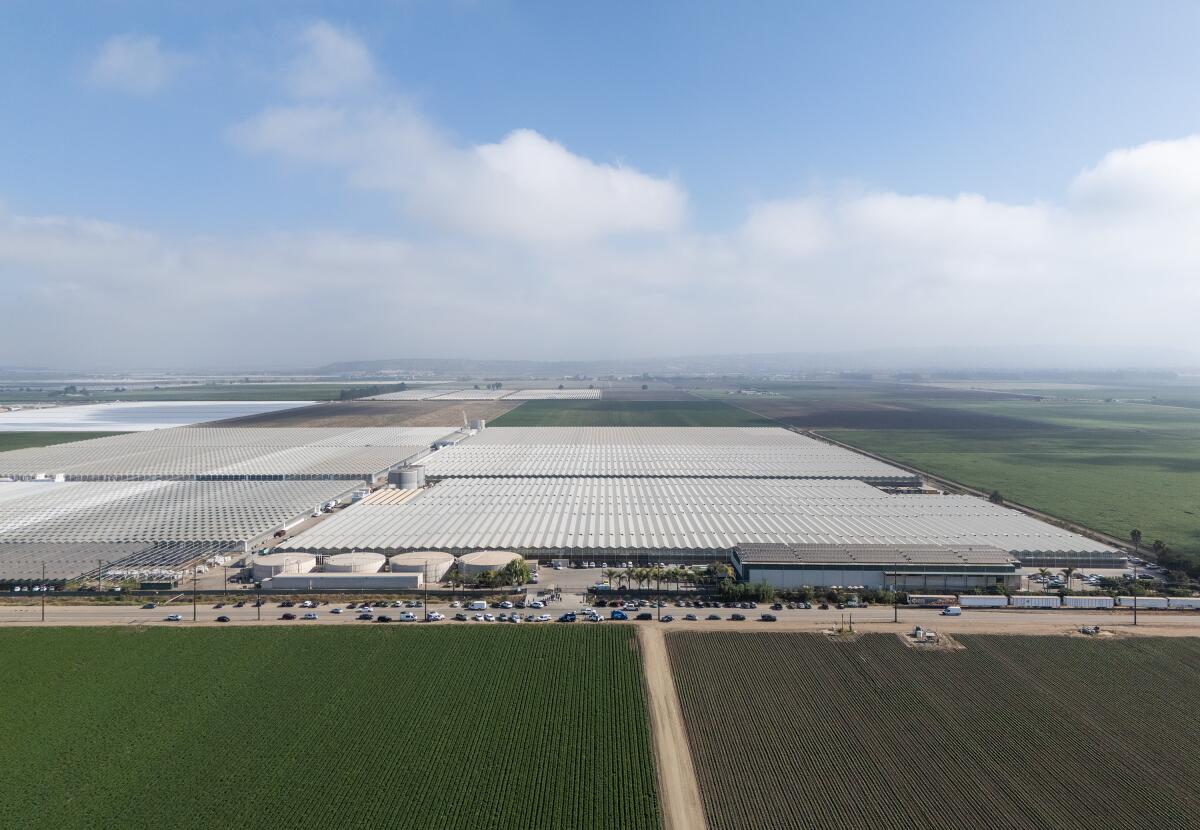
A Greenwich father of two hasn't been allowed to see his young sons since January — branded too dangerous to be around children by his own in-laws in a bitter same-sex divorce.
But those same in-laws? They co-founded and sit on the board of Glass House Brands, the publicly traded California cannabis company where federal agents rescued 14 children from suspected forced labor during a massive ICE raid last July that left one worker dead and more than 360 arrested.
Abraham Rosenwald, 37, of Greenwich, has been separated from his sons — ages 4 and 1 — since January 10, when his husband, James Benno Rosenwald IV, obtained a temporary restraining order in Stamford Superior Court. The TRO was dissolved a month later after the state Department of Children and Families found every allegation against Abraham unsubstantiated.
He still hasn't gotten his kids back.
The Glass House Connection
The Rosenwald family's ties to Glass House Brands Inc. (OTCQX: GLASF) run deep — and run through money.
Jocelyn Rosenwald is a co-founder and sits on the board of directors of Glass House Brands. Her company email appears on a June 2021 communication in which CEO Kyle Kazan thanked early investors for “the brave decision to risk investing in a federally illegal industry and choosing us.”
Glass House went public days later.
SEC filings, Canadian securities records, and Glass House's own annual reports paint a picture of financial entanglement so dense it reads like a corporate org chart disguised as a family tree.
The Rosenwald clan controls at least 23.4% of Glass House's total voting power — split between Jamie Rosenwald III (~14.1%) and his daughter Jocelyn (~9.3%), who co-founded the company. That's a controlling block in a company with no majority shareholder.
But voting power is just the top layer. Here's the full stack:
- Jocelyn Rosenwald personally holds 252,577 subordinate voting shares, plus 436,260 multiple voting shares and 419,096 exchangeable shares. The Jocelyn May Rosenwald Trust holds an additional 290,925 exchangeable shares and 300,304 multiple voting shares. She received RSU grants — 10,802 shares vesting January 10, 2026 (filed 54 days late with Canadian regulators) and another 5,368 shares on April 1, 2026.
- The Rosenwald Family Trust holds 413,384 subordinate voting shares and owns 75%+ of Rosenwald Capital Management (RCM), which in turn is the majority owner of Dalton Investments.
- The JBR IV Trust — Benno's trust — held 152,828 Glass House shares as recently as August 2025. As of April 7, 2026, it's down to 82,228 shares after dumping 70,600 shares for approximately $557,540 — including 25,600 shares sold in an 8-day sprint from March 31 to April 7, during active dissolution discovery.
- Kings Bay Investment Co., a Cayman Islands entity on whose board sat Jamie Rosenwald, originally participated in $8 million of convertible notes that became Glass House preferred shares. It held 329,046 shares as of August 2025 — and then liquidated to zero in December 2025, cashing out approximately $2.76 million in 8 trades over 8 days.
- Beach Front Properties LLC — co-founded by Jamie Rosenwald and Glass House CEO Kyle Kazan — made a $2 million loan to Glass House in February 2021 that converted to preferred equity four months later. But Beach Front isn't just an investor. It owns much of the real estate Glass House operates on. RCM is listed as Beach Front's manager of record with the California Secretary of State — a fact that wasn't disclosed in RCM's Form ADV until March 30, 2026, ten days before a discovery deadline in the dissolution case.
- Beach Front Property Management Inc. (BFPM) has a $140,000-per-year consulting agreement with Glass House dating to September 2020, for “mergers and acquisitions advisory, real estate acquisition and financing services.”
- Jon A. Neu Insurance — majority-owned by BFPM — brokers the insurance for Glass House's operations. Commissions: $399,000 in FY2024 and $298,000 in FY2025. This is the same entity that funded the job offer Jamie made to Benno to relocate to California — the relocation dispute that triggered the dissolution.
- Glass House pays over $1 million per year in rent to a network of related-party LLCs partially owned by company executives and board members — including entities in Lompoc, Long Beach, Isla Vista, and Santa Barbara. The total FY2025 related-party rent: $1,028,000.
- Related-party preferred equity holders received approximately $1.5 million in dividends in FY2025 and participated in $13 million of new preferred issuances.
Add it up: consulting fees, insurance commissions, real estate rent, preferred dividends, and share liquidation proceeds. The Rosenwald family's estimated annual cash extraction from Glass House exceeds $3.4 million — before counting Dalton's management fees on $5.7 billion in assets under management, which flow through RCM to the Rosenwald Family Trust.
None of these interests appear in the financial affidavit Benno filed in the Connecticut dissolution proceedings, according to court records reviewed for this report.
The Connective Tissue — BFPM and a Settlement with Domestic-Violence Victims
Of all the entities in the Rosenwald network catalogued above, Beach Front Property Management Inc. — BFPM — is the connective tissue: the operating bridge through which consulting fees, insurance commissions, real-estate rent, and the California job offer that triggered the Connecticut dissolution all route between the family and the publicly-traded cannabis company.
In August 2024, the California Civil Rights Department closed a complaint against this same Beach Front Property Management. The complaint alleged that BFPM's leasing practices threatened the eviction of domestic-violence victims — a class protected under California Government Code § 12955 and the federal Fair Housing Act.
BFPM settled. The terms included a $7,500 monetary payment to the complainant and a mandatory policy-reform mandate requiring the company to revise its leasing protocols to comply with state and federal domestic-violence-victim protections.
The same Beach Front Property Management that takes $140,000 a year from a publicly-traded cannabis company, brokers its insurance through a subsidiary at nearly $400,000 in commissions, owns the real estate the company operates on, and structured the job offer that triggered the Connecticut dissolution — settled a California civil-rights complaint in 2024 over policies that threatened to evict domestic-violence victims.
The irony is not procedural. It is structural. The Plaintiff in this Connecticut dissolution has secured a restraining order against the Defendant — an order from the very statutory family designed to protect domestic-violence victims — despite the Connecticut Department of Children and Families unsubstantiating all allegations against him. The family entity through which the Plaintiff and his father have organized the financial network that ties them to Glass House Brands is the same entity that, in a different jurisdiction and a different year, agreed under regulatory pressure to stop threatening the eviction of the very category of victim the restraining-order machinery is built to protect.
The juxtaposition appears nowhere in Benno's financial affidavit. It appears nowhere in the briefs his counsel has filed in Connecticut. It is a matter of California public record — verifiable through a public-records request to the California Civil Rights Department.
FY 2025
Related Party
Liquidated
by Family
$2M Loan
→ Equity
Cayman → $0
Dec 2025
$298K–$399K
per year
$140K/yr
Since 2020
The Insider Trading Pattern
The financial network is one story. What the family patriarch has done inside that network — specifically, with shares of the publicly-traded company he co-founded — is another.
On April 27, 2026, James B. Rosenwald III sold 15,000 GLAS.A.U shares at $10.5355 per share, generating $158,033 in a single transaction. It was the largest single-day insider sale of the month for him. It brought his April 2026 cumulative public-market dispositions to 70,000 shares for $656,733.
The next trading day, April 28, 2026, Glass House Brands disclosed material adverse news: FY2026 Adjusted EBITDA guidance was cut from “high $40M” to “high $30M” — a 25 percent reduction. FY2026 cash was cut from $50M to “low $40M.” FY2026 gross-margin target was cut from 48 percent to “mid 40s.” Cost of production was raised from $100 per pound to $111 per pound.
The bad news was wrapped in a Form 6-K filed April 29, 2026 — one filing, three exhibits: the FY2026 guidance reduction, a 30,664,500-warrant redemption notice, and a Vireo joint-venture reference. The 6-K is the price-moving event.
The gap between Rosenwald III's insider liquidation and the disclosure of material adverse news that moved the stock: zero trading days.
$656,733 · 70,000 shares sold by Rosenwald III in April 2026
0 · trading days between his largest April sale and Glass House's bad-news disclosure
44 · days late on the SEC Form 144 he was required to file
1,786 · days the family has gone without filing the SEC ownership form the law requires
$3.65M+ · total insider liquidations across the family network in six weeks
The Form 144 He Skipped
Federal securities law requires insiders selling restricted stock above certain thresholds to file a Form 144 with the SEC. The threshold is $50,000. Rosenwald III's April 2026 dispositions — $656,733 — were fourteen times over that threshold.
He didn't file. As of May 20, 2026, the Form 144 is 44 days delinquent.
He knew the obligation. He filed Form 144s on May 16, 2025, August 14, 2025, and November 24, 2025 for earlier dispositions. The November 2025 filing covered $396,468 / 51,632 shares — a smaller volume than the April 2026 sales he chose not to disclose.
The pattern, in plain English: smaller sale, filed Form 144. Larger sale, no Form 144. The skipping is not inadvertent.
The 1,786-Day Gap
The Schedule 13D/G is the SEC filing that public-company shareholders owning 5 percent or more of a stock must file. The Rosenwald family's combined holdings in Glass House Brands have crossed that threshold since the company's SPAC merger closed on June 29, 2021.
As of May 20, 2026, the SEC's EDGAR system shows zero Schedule 13D, 13G, 13D-A, or 13G-A filings under the family's relevant CIK (0001848731). Zero.
The gap: 1,786 days.
Eight of Glass House's thirteen “Company Founders,” as listed on the public-record Exhibit B of the company's founding documentation (DocuSign Envelope ID E20E0E70-9DCB-4E5D-9665-EDED90003CD1), are Rosenwald or Persky family entities. The aggregation is on the face of the filing the company itself signed and made public.
For comparison, the obligation to file the Schedule 13D has existed in essentially its current form since 1968. Glass House Brands has been a public company for nearly five years — 1,786 days. The family has filed nothing.
The Pattern Across the Family
Rosenwald III is not selling alone. Cumulative insider dispositions across seven members of the family network between April 1 and May 7, 2026 totaled negative 384,209 shares for roughly $3.65 million. The two largest clusters were May 1 and May 7 — a two-cluster pattern that recurred immediately after the April 28 bad-news disclosure.
The pattern is what the SEC calls Theory 9 — insider selling that immediately precedes the disclosure of material adverse news, then recurs in clustered selling immediately after. The Rosenwald family has executed both halves of the pattern in 2026.
Separately, the family has accumulated 15 or more late SEDI (System for Electronic Disclosure by Insiders) filings across 9 insiders in Canada — Glass House Brands is listed on the Cboe Canada exchange in addition to the OTCQX. The Ontario Securities Commission and the British Columbia Securities Commission have both received whistleblower submissions documenting the pattern.
The Schedule the Shareholders Never Saw
In 2021, ahead of the SPAC merger that took Glass House Brands public, the company mailed proxy materials to non-founder shareholders. Per EDGAR-pulled cover page documentation (accession 0001104659-21-125828) and Exhibit 99.70 of that filing, those mailed materials included a Founders list. They did not include Schedule 4.17, 4.4, or 2.5 — the related-party-transaction schedules that disclose the financial arrangements between the founding-family entities and the public company.
That omission has been continuous since the May 6, 2021 mailing date. 1,840 days as of this writing.
The non-founder shareholders — the retail investors who put up the cash that took Glass House Brands public — never received the documents that would have shown them the related-party network they were buying into.
The Regulatory Response
The pattern is not theoretical. The same Greenwich father at the center of this story, representing himself, has filed:
- Six supplemental whistleblower submissions to the SEC Office of the Whistleblower (Tip, Complaint, and Referral system)
- Two supplemental submissions to the IRS Form 211 whistleblower program
- Comprehensive v5 submissions to the Ontario Securities Commission and the British Columbia Securities Commission
- A PCAOB complaint regarding audit-committee independence and certification reliability
- Tier-1 and Tier-2 federal political-corruption referrals (DOJ Public Integrity, FEC, NY Attorney General, California FPPC)
The combined estimated regulatory penalty exposure across SEC, OSC, BCSC, IRS, and the state-level enforcers in the documents he has filed: $2.55 million to $42 million-plus.
The whistleblower bounty potential — the percentage of any recovery payable to the person who put the case before regulators — sits at the upper end of multiple statutory ranges. For the SEC alone, the bounty band is 10 to 30 percent of monetary sanctions on a recovery exceeding $1 million; the documents already filed contemplate recoveries in the $500,000 to $12 million range. The same analysis applies, with separate caps, at OSC, BCSC, IRS, and CRA OTIP.
The father who built the case from his own laptop, with his own AI, is the same father whose husband's family has spent the last 130 days arguing in Connecticut Superior Court that he is a danger to his children.
The Raid
On July 10, 2025, hundreds of ICE and CBP agents descended on Glass House cultivation facilities in Camarillo and Carpinteria, California, executing criminal search warrants for harboring and employing undocumented workers.
DHS Secretary Kristi Noem announced that 14 children — from Mexico and Honduras — were rescued from “potential forced labor, exploitation, and trafficking.” One person arrested had a prior conviction for attempted child exploitation. A 57-year-old farmworker, Jaime Alanis Garcia, fell 30 feet from a greenhouse roof during the chaos and died.
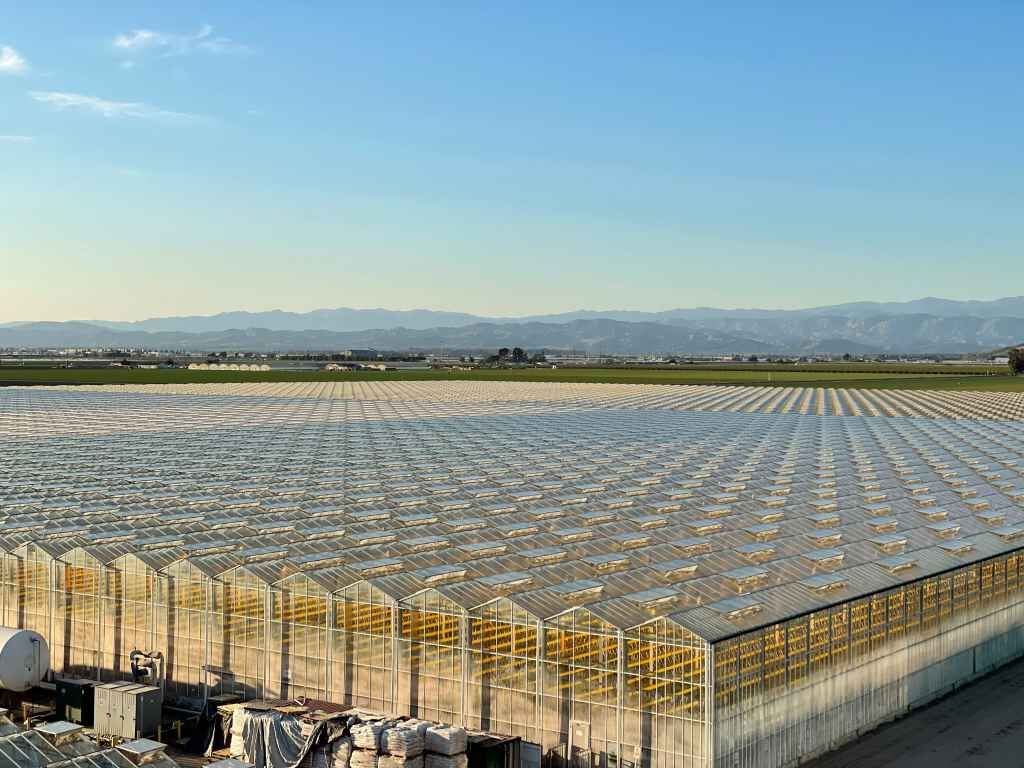
The final tally: 361 arrests. It was the second-largest single-state ICE worksite operation in U.S. history, behind only the first Trump administration's 2019 Mississippi chicken plant raids.
In its annual SEC filing afterward, Glass House disclosed that it had implemented “age-verification and visitor-management procedures” at its facilities — an implicit admission that such procedures were not in place when the children were found on-site.
The company projected a $25–30 million revenue hit from the disruption. Full-year 2025 revenue came in at $182 million, down from $200.9 million the prior year.
They called me a danger to children. Meanwhile, my husband's sister is on the board of a company the feds raided for child labor. You can't make this up.
The House That Glass Built
Follow the money from the farm to the front door.
On December 1, 2022, Benno Rosenwald purchased 15 Horseshoe Road in the Greenwich suburb of Cos Cob for $1,775,000, with a mortgage from First County Bank. He was the sole grantee on the deed. The Rosenwald Family Trust was presented as proof of funds.
On August 17, 2025, the JBR IV Trust — Benno's trust, held at Morgan Stanley, with Jamie Rosenwald's mother Jill as trustee — began selling Glass House Brands shares through the Canadian securities system. The dispositions are documented in SEDI insider filings signed by James B. Rosenwald III.
Forty-six days later, on October 2, 2025, First County Bank executed a Release of Mortgage, recorded in the Greenwich Land Records at Volume 8492, Page 193. The basis: “the note secured by said mortgage having been fully paid.”
A $1.5 million mortgage, paid off. The JBR IV Trust's Glass House share sales — proceeds from equity in a company that would be raided for child labor less than a year earlier — and the mortgage payoff are separated by 46 days.
The house where Abraham's children sleep was paid for with stock in a company where 14 other children were rescued by federal agents.
And there is one more detail about 15 Horseshoe Road.
On May 14, 2012, Charles Hopper — a former Lehman Brothers managing director who had spent a decade catering to the ultra-wealthy — left a stack of financial papers on his kitchen table and a note to his wife on the couch. Then he went into the garage and hanged himself. He was 63. “He was under tremendous financial pressure,” his wife Kathryn told the New York Post, “and he felt aged out of his industry.”
The house where a Wall Street titan killed himself after the financial crisis is the house where Abraham's children live. The house he cannot enter. The house paid off with cannabis stock from a company raided for exploiting children.
‘They call me the danger’
Abraham Rosenwald was fitted with a GPS ankle monitor in January at the request of Benno's attorneys. He wears it 24 hours a day. He has never been accused of violence against his children. DCF cleared him. The TRO was dissolved.
Yet he remains separated from his sons, while his husband's family earns consulting fees and holds millions in equity in a company that — by its own disclosure to the SEC — didn't have age-verification procedures in place when federal agents found children on the property.
Abraham is representing himself in the divorce. Benno is represented by Schoonmaker, George, Blomberg, Bryniczka & Welsh, a boutique Greenwich family law firm. The Rosenwald family's financial infrastructure — an interlocking network of trusts, LLCs, and offshore entities spanning RCM Capital Management, Dalton Investments, Beach Front Properties, and Glass House Brands — has been the subject of 15 subpoenas Abraham filed through California Superior Court.
The Court's Own Words
What sustains the restraining order against Abraham Rosenwald is a feedback loop that the Connecticut Superior Court Judge who issued it stated on the record, in open court, after five days of evidentiary testimony.
On March 4, 2026, the Hon. Vikki Cooper ruled from the bench in Rosenwald v. Rosenwald. Three findings from that ruling, taken verbatim from the certified transcript, deserve to be read together:
Finding No. 1: He is not harming the children.
I don't believe, however, that your conduct is causing harm to the children. I don't believe that. I believe that you love your children. I believe you both love your children.
That is a finding of fact by the very Judge who was being asked to keep a restraining order in place against him — on behalf of two young children who, by the Court's own determination, were not being harmed.
Finding No. 2: His husband isn't harming them either.
Abraham had filed his own emergency protective orders on behalf of the children, alleging that his husband Benno had engaged in conduct creating a risk of harm to them — including drug use in the children's presence. The same Judge addressed those filings in the same ruling:
With respect to the TROs, again, they're dismissed. You have not established … that Mr. Benno is, that his conduct is creating continuous physical harm for the children.
Two parents. Two sets of allegations. One Court. The finding, in both directions: neither parent is harming the children. The restraining order issued against Abraham does not, and never did, extend to the children. As the Court stated explicitly: "The order does not extend to the children. The order extends to Mr. Benno."
Finding No. 3: The bootstrap.
So why, then, is the order in place at all? The Judge answered that question in the same ruling, also from the bench:
If Mr. Abraham had not violated, allegedly violated the restraining order, and he's been arrested here in court twice, the court would have a harder time making the argument that he presents as a threat to you. But because of all of those violations … that's dangerous behavior.
Read that sentence carefully. The Judge is saying, in plain language: but for the alleged violations of the restraining order, this Court would have a harder time concluding that Abraham presents a threat to his husband.
The order is sustained because of alleged violations of the order itself. The order created the violations; the violations now justify the order. The legal term for this is a bootstrap. The colloquial term for this is a Catch-22.
The original temporary restraining order was issued on January 10, 2026 — ex parte, meaning without Abraham present and without an evidentiary hearing — based on the husband's allegations alone. The "violations" the Court relies on to sustain the order include calling the police when Abraham went to see his son on the child's birthday on January 13, 2026; text messages the same Judge later characterized as "loving" rather than threatening; and contacts that occurred during a 72-hour window when Abraham was disoriented, ill, and not represented by counsel.
The Connecticut Department of Children and Families investigated every allegation. The state agency that exists for the specific purpose of evaluating risk to children unsubstantiated every allegation against Abraham. The Court itself, in the ruling quoted above, found no harm to the children. The husband's family is the same family whose business interests are catalogued at length earlier in this article — cannabis-company insider trading, the 2015 Epstein email, the 1,786-day SEC reporting gap, the 2024 California Civil Rights Department settlement over the threatened eviction of domestic-violence victims.
The restraining order remains in place. 130 days. The grandmother has not seen her grandsons. The father, who the Judge found is not harming his children, has not been allowed to see them either.
The Machine He Built
How does one self-represented father, fitted with an ankle monitor and barred from his children, produce the analysis you have just read — an SEC-grade financial-forensics workflow, an insider-trading pattern detector, a 1,786-day Schedule 13D gap counter, a 113,000-case statewide-docket scrape, and a structured citation-verification chassis? On his own.
The answer is a system he built himself and named A.R. Pro Se Strategic Operations. The work is publicly catalogued at arprose.com.
ARIA — The Voice AI Legal Assistant
Abraham calls his system ARIA. It is a patent-pending custom model architecture for legal operations, designed and built by Abraham himself, that runs on a hybrid stack — partly self-hosted on metal in his own studio, partly routed through commercial cloud-AI APIs from Anthropic, OpenAI, Meta, and Kimi K. The split is deliberate: privileged legal material is processed on the locally-hosted side and does not leave the machine; legal reasoning, drafting iteration, and verification routines pass through the cloud-side APIs under structured workflows Abraham designed for the purpose.
ARIA is not a chatbot wrapped in a web page. It is a voice-first, multi-model legal-operations co-pilot — built from scratch, named, and integrated into the day-to-day work of running a self-represented complex-dissolution defense and a parallel multi-sovereign regulatory whistleblower workflow. The system is what produced the filings on the Connecticut docket, the statistical analysis of the Connecticut family bench, and the six supplemental SEC whistleblower submissions, the OSC v5 and BCSC v5 submissions, the IRS Form 211 supplements, and the PCAOB and federal political-integrity referrals described earlier.
The Data Engine
Behind ARIA is a litigation-analytics layer that has done what no solo practitioner has attempted at this scale. Abraham scraped 113,162 Connecticut court cases and 3,446,855 docket entries across all nine Connecticut judicial districts, processed 174,661 individual grant/deny rulings, and modeled the statistical patterns underneath them. That dataset is what produced the cluster-level chi-square (χ² = 92.24, p = 7.7×10⁻²²) and the Fisher exact test (p = 5.4×10⁻⁵) cited in his recusal and venue filings against the Connecticut bench.
The financial-intelligence pipeline runs in parallel. It maps corporate structures across SEC EDGAR, Canadian SEDI, the OTC markets, and the SEC Form ADV / Form D / Form 144 / Form 13D registries. It traces beneficial ownership across international jurisdictions. It is what surfaced the 1,786-day Schedule 13D gap, the April 27 cluster-sale 0-day disclosure gap, and the 1,840-day Schedule 4.17 omission described earlier in this article.
The Verification Chassis
Every legal filing Abraham has signed since April 24, 2026 — in response to an on-the-record directive from a Connecticut Superior Court judge concerning his use of AI in legal research — carries four structural protections he built specifically for that purpose:
- A sworn Certification of Verification under Connecticut Practice Book § 4-2, in which Abraham personally attests that every authority cited in the filing has been verified against primary sources;
- A hash-chained Due Diligence Verification Report identifying every authority and the specific verification work performed;
- A SHA-256 tamper-detection hash printed on the face of each Certification, so any modification to the served Report is detectable by recomputation; and
- A four-axis pre-filing discipline he calls ROSE — Read, Own, Statutes, Exhibits — covering personal review, signature accountability, statutory authority verification, and exhibit-foundation discipline.
The chassis is a structural answer to the concern about generative-AI hallucination in legal research that the Connecticut bench, like courts across the country, has raised.
The Connecticut Superior Court is currently considering whether to impose sanctions on Abraham Rosenwald for the volume of filings he has produced with this infrastructure.
The Epstein Connection
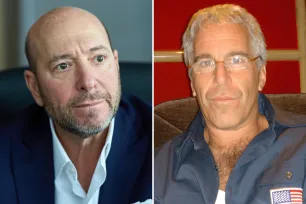
The family patriarch's name surfaced in another context in November 2025 when the House Committee on Oversight and Accountability released 20,000 pages of Jeffrey Epstein-related documents.
Among them: a January 5, 2015 email from James B. Rosenwald III to Epstein, his former physics teacher at the Dalton School in Manhattan. The email's subject line was “High Profile.”
“Unless your PR advisor is Donald Trump, I am not sure that current press provides you with much benefit,” Rosenwald wrote. “Perhaps I am wrong? Not the first time!”
He went on to congratulate Epstein on his “wonderful financial successes since your days as my Physics prof at Dalton!!”
Ps. David Asch and I toasted to you during our Thanksgiving weekend in Amagansett in November.
The timing is what matters. Days before Rosenwald sent that email, two anonymous women — one of whom turned out to be Virginia Giuffre — filed court documents in Florida alleging Epstein had forced them to have sex with England's Prince Andrew between 1999 and 2002, when they were minors. The allegations were front-page news. Rosenwald wrote anyway.
David Asch, the man Rosenwald says he “toasted” Epstein with, is now Senior Vice President of Strategic Initiatives at the University of Pennsylvania. He told the Daily Pennsylvanian that “the last time I had contact with him was nearly 50 years ago” and called Epstein “a contemptible man.”
Jamie Rosenwald didn't just attend the Dalton School. He named his investment firm after it.
Dalton Investments LLC — founded by Rosenwald, now managing $5.7 billion in assets — takes its name from the Upper East Side private school where Jeffrey Epstein taught physics to Rosenwald and his classmates in the mid-1970s. The school where Epstein, a Cooper Union dropout, was hired at age 21 by then-headmaster Donald Barr — father of William Barr, who was serving as United States Attorney General when Epstein died in federal custody on August 10, 2019.
Rosenwald built a multi-billion-dollar firm, named it after the place where he was taught by a future sex trafficker, and then emailed that sex trafficker decades later to congratulate him on his wealth — days after child victims went public.
Dalton Investments manages institutional capital including funds from the University of Pennsylvania endowment — the same university where David Asch, the man Rosenwald toasted Epstein with at Thanksgiving, serves as Senior Vice President of Strategic Initiatives. The money flows from an Ivy League endowment through a firm named after the school where Epstein groomed children, managed by the man who congratulated Epstein on his success while the trafficking allegations were on every front page.
Three children. Three crises. One family.
Step back and look at what one family name connects:
Fourteen children were rescued from “potential forced labor, exploitation, and trafficking” at a cannabis farm where the family holds 23.4% voting power, co-founded the company, sits on the board, and earns $140,000 a year in consulting fees. Glass House's own SEC filing admits age-verification procedures were not in place.
Two children — ages 4 and 1 — have been separated from their father for 130 consecutive days, based on a restraining order that was dissolved after DCF found every allegation unsubstantiated. The father wears a GPS ankle monitor. He represents himself. The family that obtained the order is represented by a boutique Greenwich firm.
Unnamed children — victims of Jeffrey Epstein's sex trafficking operation — were the subject of headline-making court filings just days before the family patriarch emailed Epstein to congratulate him on his “wonderful financial successes” and to report that he'd been toasted at Thanksgiving.
In every instance, the common thread is children. In every instance, the Rosenwald name is proximate. And in every instance, the person the family has labeled a “danger to children” — the pro se father with the ankle monitor and the AI database — is the one with the cleanest record.
DCF cleared him. The TRO was dissolved. He has never been charged with or accused of any act of violence against a child.
He also built something unusual.
“I built an AI system to organize every document, every filing, every text message from seven years of marriage,” he said. “They assumed I'd run out of money and give up. I don't have money. I have a database.”
| Metric | Figure | Source |
|---|---|---|
| Combined family voting power in Glass House Brands | ~23.4% | 2025 Information Circular (Jamie ~14.1% + Jocelyn ~9.3%) |
| GH Group Founders that are Rosenwald or Persky entities | 8 of 13 | Exhibit B, founding documentation (DocuSign E20E0E70) |
| Estimated annual family cash extraction from the issuer | $3.4M+ | FY2025 Form 40-F related-party disclosures, aggregated |
| Family-network shares liquidated, Aug 2025 – Apr 2026 | 369,646 (~$3.32M) | SEDI insider filings |
| Insider dispositions across 7 insiders, Apr 1 – May 7, 2026 | 384,209 shares (~$3.65M) | SEDI insider filings |
| Days without a Schedule 13D/G under the family's CIK | 1,786 | SEC EDGAR, CIK 0001848731 |
| Days Schedule 4.17 omitted from non-founder proxy mailings | 1,840 | EDGAR accession 0001104659-21-125828, Ex. 99.70 |
| Form 144 delinquency on $656,733 of April 2026 dispositions | 44 days | SEDI vs. EDGAR Form 144 record |
| Late SEDI insider filings across 9 insiders | 15+ | SEDI feed (53–373 days late) |
| Related-party rent paid by the issuer, FY2025 | $1,028,000 | FY2025 Form 40-F |
| Related-party preferred dividends / new preferred issuances, FY2025 | $1.5M / $13M | FY2025 Form 40-F |
| BFPM consulting agreement (since Sept 2020) + insurance commissions (FY24–25) | $140K/yr + $697K | FY2025 Form 40-F |
| July 10, 2025 enforcement operation at issuer facilities | 361 arrests · 14 minors · 1 death | DHS press release |
| Issuer-projected revenue impact of the raid | $25–30M | FY2025 revenue $182M, down from $200.9M |
| Assets under management at Dalton Investments | $5.7B | Form ADV |
A representative for Glass House Brands did not respond to a request for comment. Attorneys for Benno Rosenwald did not respond. Jamie Rosenwald, the family patriarch and a board member of Kings Bay Investment, could not be reached.
Abraham says he's not going away.